What’s Happening?
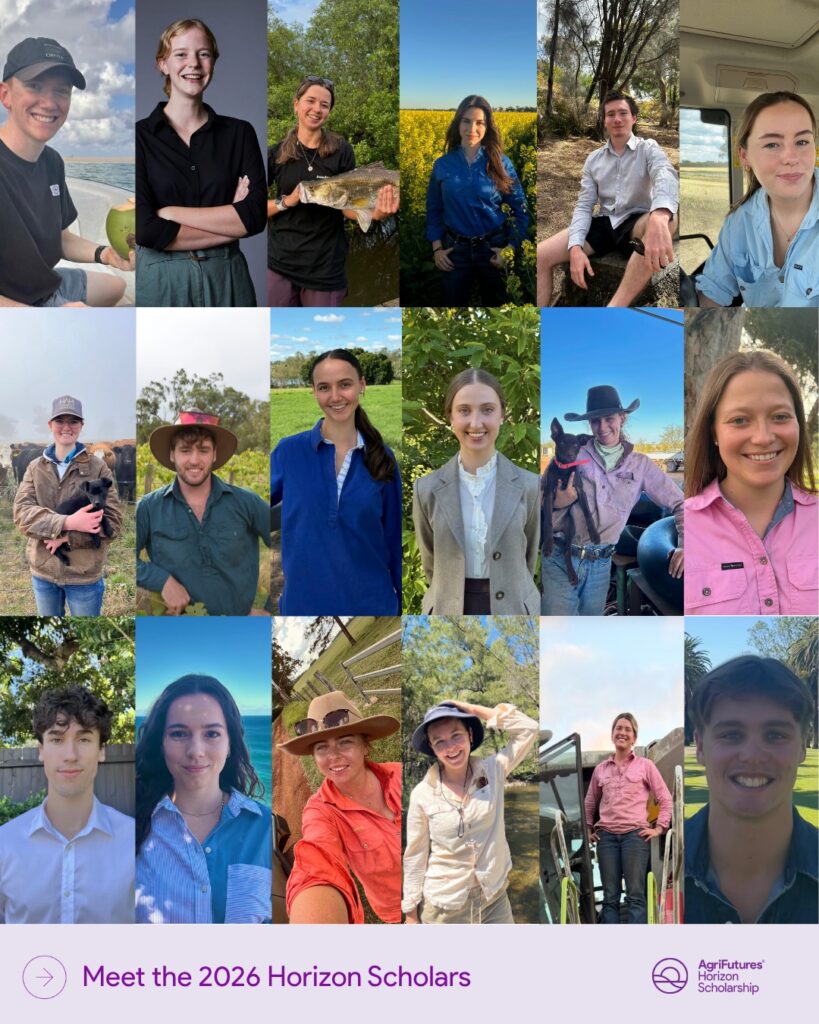
Three Queensland students have been named in the 2026 AgriFutures Horizon Scholarship cohort, joining a national group of young people preparing for careers across Australian agriculture.
AgriFutures Australia announced 18 high performing university students for the 2026 cohort.
The program supports students in the final two years of a full-time undergraduate degree at an Australian university.
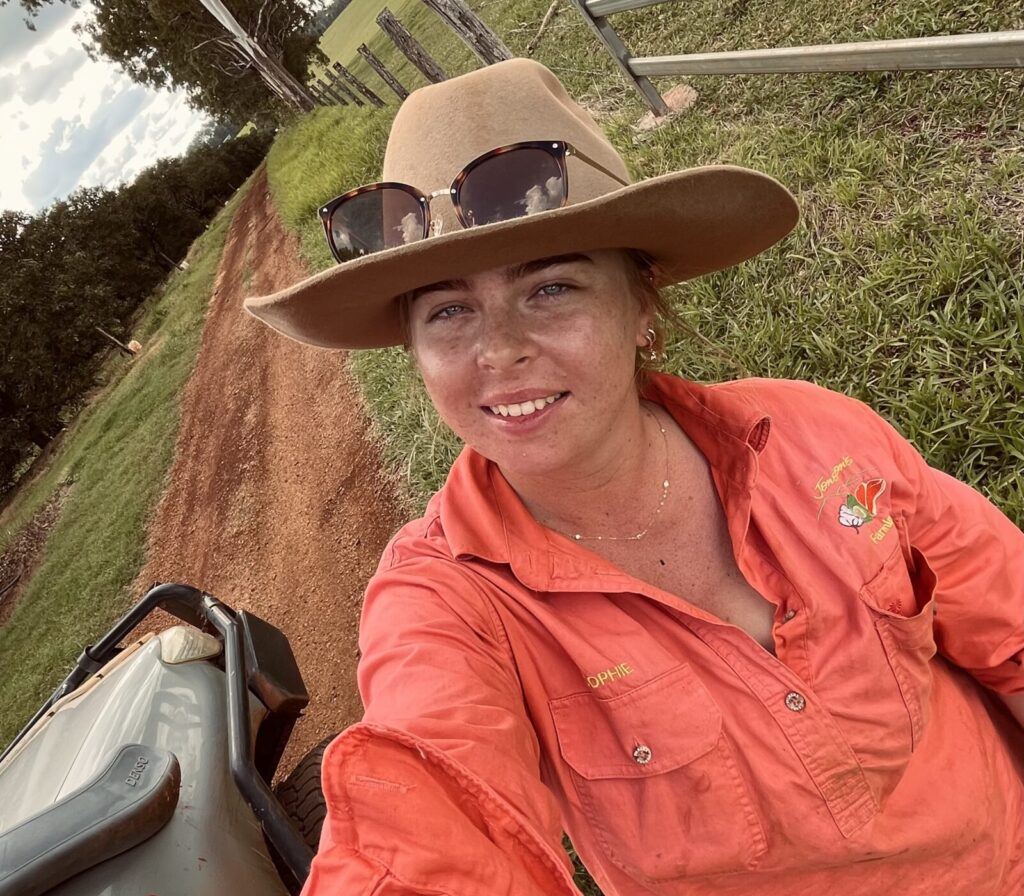
Queensland’s scholars include Sophie Maree Collins Jonsson from Ravenshoe, Maeve Lowe from Tully and James Telford from Townsville.
Sophie is studying agricultural science and agricultural business at the University of Queensland.
Her interests include crop production, soil health, crop nutrition and sustainable farming systems.
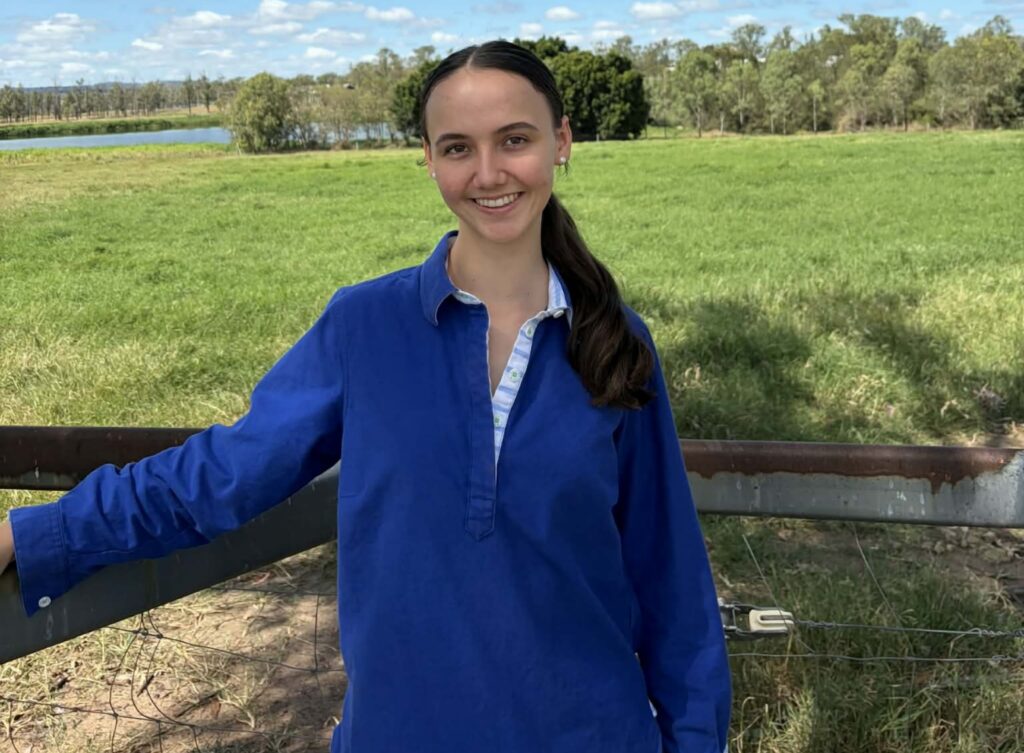
Maeve is studying a Bachelor of Agricultural Science at the University of Queensland, Gatton.
She grew up in Tully, where her family produces bananas and cane.
James is studying a Bachelor of Veterinary Science with Honours at James Cook University in Townsville.
He grew up in the Solomon Islands and developed an early interest in animal health through tropical livestock systems.
AgriFutures Australia Managing Director Brianna Casey AM said the cohort reflects the strength of young leaders entering rural industries.
“The AgriFutures Horizon Scholarship is a long-term investment in people, building the capability, leadership and industry connection to support strong and sustainable sectors,” Ms Casey said.
“These scholars are developing the skills that matter, but just as importantly, they are building relationships with industry that will carry through their careers. That connection ensures their knowledge is applied on farm, in businesses and across supply chains.”
“It’s this combination of capacity building and connection that underpins the long-term success of our rural industries and the communities that support them.”
Why It Matters
Australian agriculture needs skilled young people who understand both farming and industry change.
The Horizon Scholarship links students with industry sponsors, placements, workshops and national events.
That support helps students turn university study into practical work across rural industries.
The 2026 Queensland scholars bring different regional strengths to the program.
Sophie brings experience from mixed farming and an interest in crop nutrition and soil management.
Maeve brings a Far North Queensland horticulture background shaped by bananas, cane and biosecurity challenges.
James brings veterinary science, poultry production knowledge and experience linked to tropical livestock systems.
Together, their stories show how broad modern agriculture has become.
It now includes farming, science, animal health, genetics, technology, biosecurity and supply chain work.
By the Numbers
- The 2026 cohort includes 18 university students from across Australia, each preparing for careers across rural industries.
- Since 2010, the Horizon Scholarship Program has supported more than 259 students, with several scholars later starting their own ventures.
- Each scholar receives a $5,000 yearly bursary, professional development workshops, an annual industry placement and access to national industry events.
Local Impact
For Sophie, the path into agriculture started with seeing the risks and rewards of farming up close.
“Growing up around agriculture, I became aware early on of how variable and unpredictable farming can be, especially with changing rainfall patterns, soil constraints and rising input costs across our region,” Sophie said.
“What drew me in wasn’t just the challenges, but the opportunity to improve productivity and sustainability at the same time.”
She said good agronomy, soil management and decision-making can make a real difference on farm.
“I’ve always been interested in how better agronomy, soil management and decision-making can help farmers produce more with less risk,” Sophie said.
“Seeing the impact that good management can have on yields and long-term soil health made me want to be part of that change.”
Maeve said agriculture has also shaped her life from an early age.
“Agriculture has always been a key factor in my life,” Maeve said.
“I grew up with a comprehensive understanding of how important farming is. This industry is constantly changing and requiring new and improved innovation.”
She said farming challenges were often part of family conversations.
“Like most farming families, conversations at the dinner table revolved around the hardships we face in agriculture,” Maeve said.
“I have always enjoyed a challenge, especially when the result is for the benefit of others, which is how I knew agriculture was for me.”
For James, animal health became a clear interest through tropical livestock systems and poultry production. His studies at James Cook University now connect that background with veterinary science and the chicken meat industry.
As a 2026 Horizon Scholar, James is looking forward to contributing to sustainable poultry production and supporting producers in Australian and international settings.
Zoom In
The local issues facing the Queensland scholars are different, but they share a common thread. Each wants to help producers deal with pressure in practical ways.
Sophie said one major challenge is balancing productivity with long-term soil health and input efficiency.
“Many producers are dealing with declining soil fertility, variable weather forecasts, and rising costs, alongside increasing pest pressures such as the Fall Armyworm,” Sophie said.
“This pest has become a major issue in crops such as corn and sorghum, impacting yields and adding uncertainty and cost across each season which puts pressure on both profitability and sustainability.”
She said the issue is especially hard for smaller family businesses in her region.
“Although this is a wider problem, it particularly has a larger impact on small family businesses in my region,” Sophie said.
“I’d like to be part of improving how we manage soils and nutrients, using better data, agronomy and technology to close yield gaps while protecting the resource base.”
“If we can help farmers make more informed decisions, we can improve resilience across both individual businesses and the wider supply chain.”
Maeve said banana growers in the Tully Valley are facing a serious biosecurity challenge through Panama Tropical Race 4.
“Banana farmers, such as my family in the Tully Valley, are facing a huge biosecurity challenge caused by Panama Tropical Race 4,” Maeve said.
“This has affected our family farm greatly and has given me a clear insight into the true consequences of on-farm biosecurity threats.”
She said genetic work responding to the outbreak has helped shape her interests.
“I have been inspired by the genetic work being done today in response to the outbreak and would like to involve myself more within these advancements,” Maeve said.
“In general, I would like to help farmers to cope with these challenges from a practical and personal perspective.”
Zoom Out
The Horizon Scholarship is backed by industry sponsors that help scholars gain meaningful experience aligned with workforce needs.
The 2026 cohort is supported by the AgriFutures Chicken Meat Program, AgriFutures Emerging Industries Program, Australian Eggs, Cotton Research and Development Corporation, Fisheries Research and Development Corporation, Grains Research and Development Corporation, Hort Innovation, Marine Bioproducts Cooperative Research Centre and Meat & Livestock Australia.
Sophie is supported by the Cotton Research and Development Corporation and Grains Research and Development Corporation. Maeve is supported through the horticulture stream. James is supported by the AgriFutures Chicken Meat Program.
For 2025 scholar Marcus Attard, the program showed the range of careers connected to farming systems.
“Learning directly from agronomists, researchers and growers in the Riverina was invaluable,” Marcus said.
“It showed how many different skills, across engineering, technology and research, sit behind productive and resilient agriculture.”
Fellow 2025 scholar Grace Hoey said her placement showed how research is applied across different production environments.
“Completing a placement in Western Australia showed how climate and soil variability shape on-farm decision-making,” Grace said.
“It reinforced the value of practical, sustainable solutions that are grounded in industry needs.”
Local Voices
The Queensland scholars have also been shaped by family, teachers and local industry mentors.
Sophie said her grandfather has been a major influence because of his interest in trialling new crops and adapting to change. She also named agronomist Maurilio Rezende as someone who showed the impact good advice can have on local producers.
“Their willingness to innovate, even in tough conditions, has shown me the importance of resilience and continuous improvement in this industry,” Sophie said.
Maeve said her family helped teach her the value of hard work, kindness and confidence.
“My family has showed me what hard work looks like and that kindness goes a long way,” Maeve said.
“They have been huge role models in my life and taught me that you can do anything you put your mind to.”
She also credited her high school agricultural science teacher, Mr Warren Giffin.
“Someone else who has inspired me along the way is my high school agricultural science teacher, Mr Warren Giffin, who continued to push me towards a career in agriculture and still encourages me to believe in myself and perform with confidence.”
Both students also want more young people to see agriculture as a serious career path.
“If you’re interested in making a real impact, especially in regional communities, it’s a career where you can see the results of your work directly,” Sophie said.
“The industry is evolving quickly, and there’s a real need for young people who are willing to learn, adapt and bring new ideas.”
Sophie said young people from farming backgrounds should be open to studying, working away and bringing fresh knowledge home.
“If you come off a farm, get out there in the big smoke, have a go and bring something new back to the table,” Sophie said.
“The farm will always be there for you to find your way home, but it’s important you open your eyes to something new and broaden your horizons to come back and make a difference.”
Maeve said agriculture offers many paths for young people in Far North Queensland.
“Agriculture plays a huge role in Far North Queensland, providing endless opportunities for young people,” Maeve said.
“This industry is extremely diverse and perfect for anyone who wants to make a true difference.”
“Agriculture is not only limited to farming, there is so much more. For as long as we need to eat, there will be a job in agriculture.”
What To Look For Next?
Sophie will continue her studies while gaining more practical experience across different production systems.
In the long term, she aims to work as an agronomist, helping farmers improve productivity and sustainability. She also hopes to move into leadership roles where she can contribute to broader industry outcomes.
Maeve plans to keep representing her region with pride and passion as her future in agriculture develops.
“I will continue to represent my local region with pride and passion no matter what my future in agriculture holds,” Maeve said.
“Along the way, I plan to inspire the next generation and encourage the movement towards the ag sector.”
James will continue building his veterinary science pathway through James Cook University, with a focus on poultry production and animal health. His scholarship support will help connect his studies with producers and industry needs.
As Maeve and James provide more interview responses, their regional goals and personal insights can be added to give readers a fuller view of all three Queensland scholars.