What’s happening?
An international team of scientists and infrastructure experts is investigating why unsealed roads fail and why riverbanks erode during extreme rainfall.
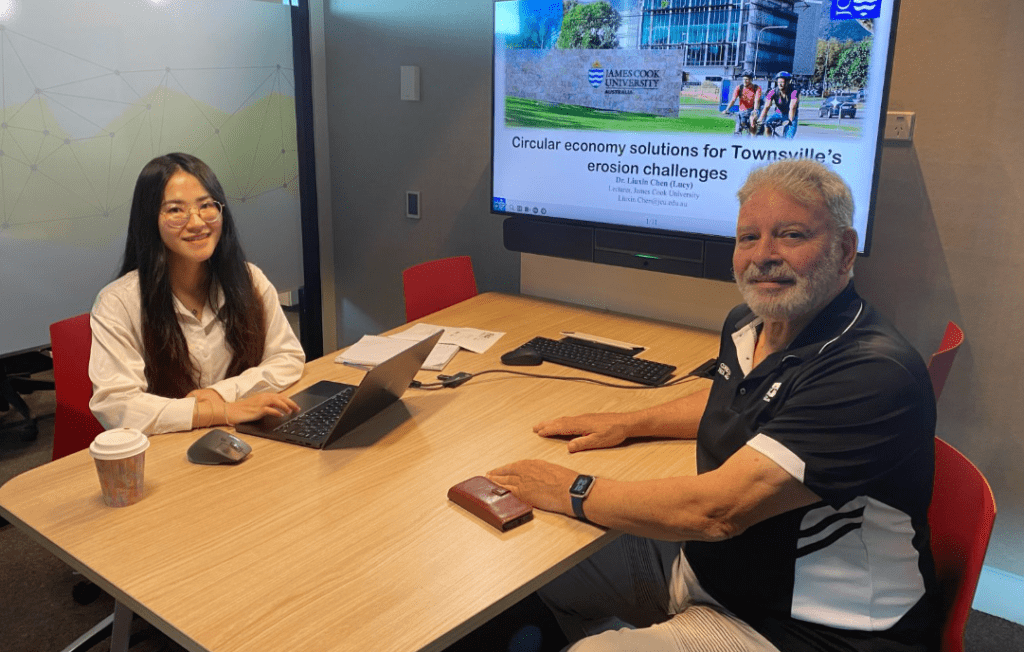
James Cook University civil engineering researcher Dr Liuxin Chen has secured an Australian Research Council Discovery Grant to lead the work.
She will collaborate with academics from Monash University and the University of Illinois Urbana-Champaign.
The three year project will focus on understanding corrugations and rutting on unsealed roads. It will also assess riverbank stability in north Queensland.
“To improve resilience, we need to know the exact reasons for road failures such as corrugations and rutting, so we can develop new strategies to deal with them,” Dr Chen said.
She added that the current approach to managing damage from climate extremes such as heavy rainfall is “ad-hoc and reactive … mostly because we still don’t know the mechanisms underpinning how or why this damage occurs.”
Why it matters
Unsealed roads play a critical role across regional and remote Australia. They support tourism, mining and agriculture, and connect communities to essential services.
When these roads fail, safety is compromised. Public access is reduced. Vehicle operating costs increase. Local councils face rising repair bills.
Riverbank erosion also places pressure on infrastructure and surrounding land. As rainfall becomes more intense, the risks are expected to grow.
“One of the most important drivers of road failures is soil moisture. If we got lots of water inside the soil, the soil becomes fully saturated, and we get lots of problems,” Dr Chen said.
By the numbers
-
63 per cent of Australia’s national road network is unsealed, highlighting the scale of exposure to damage across regional and remote areas.
-
The research project will run for three years, allowing detailed field testing, modelling and real world data analysis.
-
The team includes two PhD students and one postdoctoral research fellow, adding dedicated research capacity to tackle complex soil and infrastructure challenges.
Zoom in
The project will develop a corrugation simulator to examine how water and vehicle stress affect unsealed roads.
Advanced modelling will also be used to predict how extreme rainfall influences construction practices and the durability of road materials.
Dr Chen pointed to damage on the Mt Spec Road to Paluma in Queensland following extreme rainfall.
“If we rebuild that road back the same way, we can expect to see exactly the same problems happening again and again,” she said.
In parallel, Dr Chen has secured funding to work with several north Queensland River Improvement Trust organisations.
The focus will be on assessing existing riverbank works, including timber pile systems that have been widely implemented but not yet systematically assessed.
Zoom out
The research reflects growing pressure on infrastructure as climate patterns shift.
Increasingly intense rainfall and heavy wet seasons are placing stress on roads and riverbanks that were not designed for such conditions.
“These projects are about building a stronger evidence base for sustainable, resilient geo-infrastructure,” Dr Chen said.
“By understanding how soils behave under real operating conditions and working closely with those responsible for managing assets, we can support safer, more reliable, and more sustainable outcomes for Australian communities.”
Local impact
For Queensland councils, the findings could shape how unsealed roads are rebuilt and maintained after extreme weather.
A clearer understanding of soil behaviour and moisture impacts may help reduce repeated failures, cut repair costs, and improve road safety for regional communities.
River Improvement Trust groups in north Queensland will also gain data to guide future riverbank protection works.
What to look for next?
The team will begin field studies and modelling under the Australian Research Council Discovery Grant.
Over the next three years, councils and road construction experts are expected to work closely with researchers to test new strategies and refine construction practices.