What’s Happening?
Coral restoration technology developed by the Australian Institute of Marine Science is helping researchers prepare for one of the largest restoration field trials on the Great Barrier Reef.
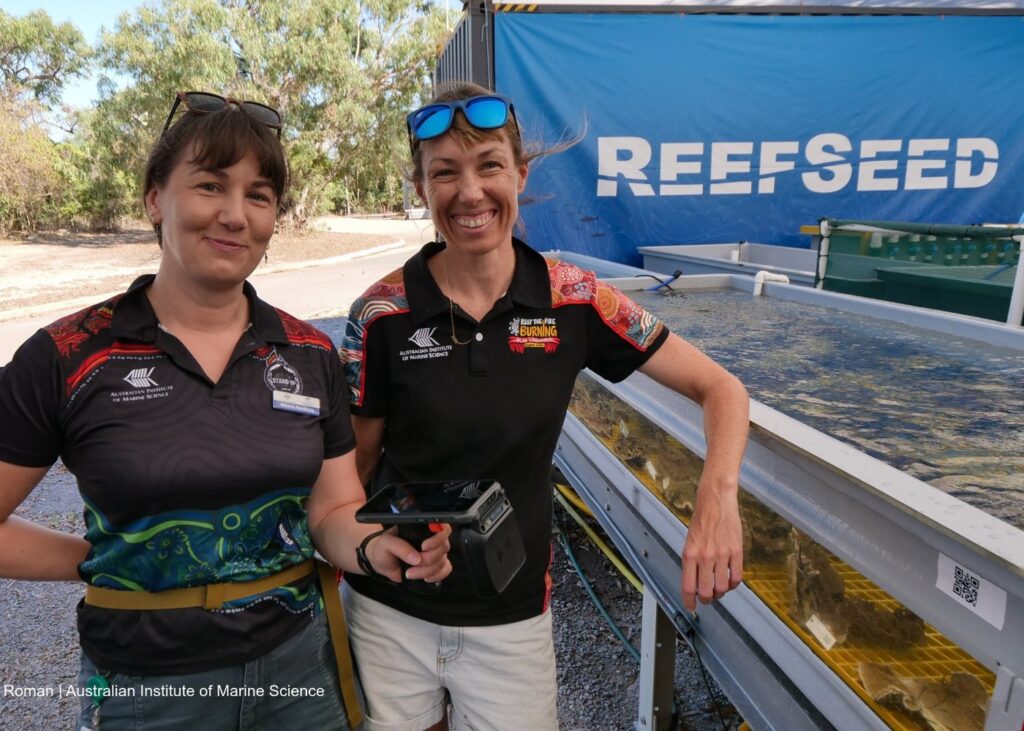
At the Australian Institute of Marine Science‘s Townsville facility, Queensland coral aquaculture operators and Traditional Owner groups have been learning to use ReefSeed technology to produce young corals for planned reef deployments.
The training forms part of a broader effort to expand restoration methods beyond research facilities and into practical use by industry and community partners.
The trial covers reef locations around the Keppel Islands and off Cairns and Port Douglas, with work underway during the Reef’s annual mass coral spawning event.
Why It Matters
The trial builds on more than a decade of research into ways to help coral reefs threatened by climate change.
Each spring, the Reef’s synchronised mass spawning event provides an important opportunity for coral reproduction and rejuvenation. Researchers are using this period to test restoration methods and improve how they can be applied on a larger scale.
Australian Institute of Marine Science researcher Dr Pirjo Haikola explained the role of industry expertise and collaboration.
“The PDP is all about using people power to scale up interventions. We are sharing knowledge, technologies and techniques with experts from Queensland coral aquaculture, and Indigenous Rangers which they can apply when they work on ReefSeed units to fertilise, rear and settle young corals ready for them to be deployed onto the Reef.”
Local Impact
At the Townsville research facility, participants have been learning to operate ReefSeed units and apply conservation aquaculture techniques.
These methods allow operators to fertilise coral spawn and rear young corals in controlled facilities before transporting them to reefs.
The training connects the research undertaken in Townsville with planned coral production at Queensland industry facilities.
By the Numbers
The Pilot Deployments Program has been working to increase coral seeding deployments across the Great Barrier Reef.
- 16,000: Coral seeding devices placed on the Reef in 2024–25.
- 44,000: Devices placed in 2025–26.
- Up to 120,000: Devices targeted for deployment in 2026–27 across reefs around the Keppel Islands and off Cairns and Port Douglas.
Each specially designed device can carry multiple young corals. The figures represent the broader program, not deployments originating specifically from Townsville.
Zoom In
ReefSeed is a transportable, containerised coral aquaculture system developed by the Australian Institute of Marine Science.
The system can produce millions of coral larvae and hundreds of thousands of young corals. Its modular design also allows operators to use individual components within existing aquaculture facilities.
The first ReefSeed unit has already undergone successful testing in the Maldives. Dr Carly Randall explained how the technology could support larger restoration trials.
“As we scale up these restoration trials, we’re improving the processes and technologies needed to meet these goals. The containerised and transportable ReefSeed unit is one way to do that. It can be used in remote areas, and it’s also modular – different components can be used outside of the ReefSeed system to bolster existing coral aquaculture systems. The components maximise fertilisation success and larval coral production, as well as reducing time and labour costs.”
Zoom Out
The Pilot Deployments Program is a three-year initiative led by the Australian Institute of Marine Science and funded by the Australian Government’s Reef Trust.
It forms part of the broader Reef Restoration and Adaptation Program, funded through a partnership between the Reef Trust and the Great Barrier Reef Foundation.
Alongside conservation aquaculture, researchers and partners will use approaches involving wild coral spawn. Indigenous ranger groups and tourism industry partners will also contribute to the restoration work.
What To Look For Next?
Following the Townsville training, partners plan to produce young corals at two Queensland industry facilities. The participating operators include Aus Fish Coral in Innisfail and Cairns Marine in Cairns.
The program plans to deploy the young corals after the November full moon as restoration trials continue across the Great Barrier Reef.