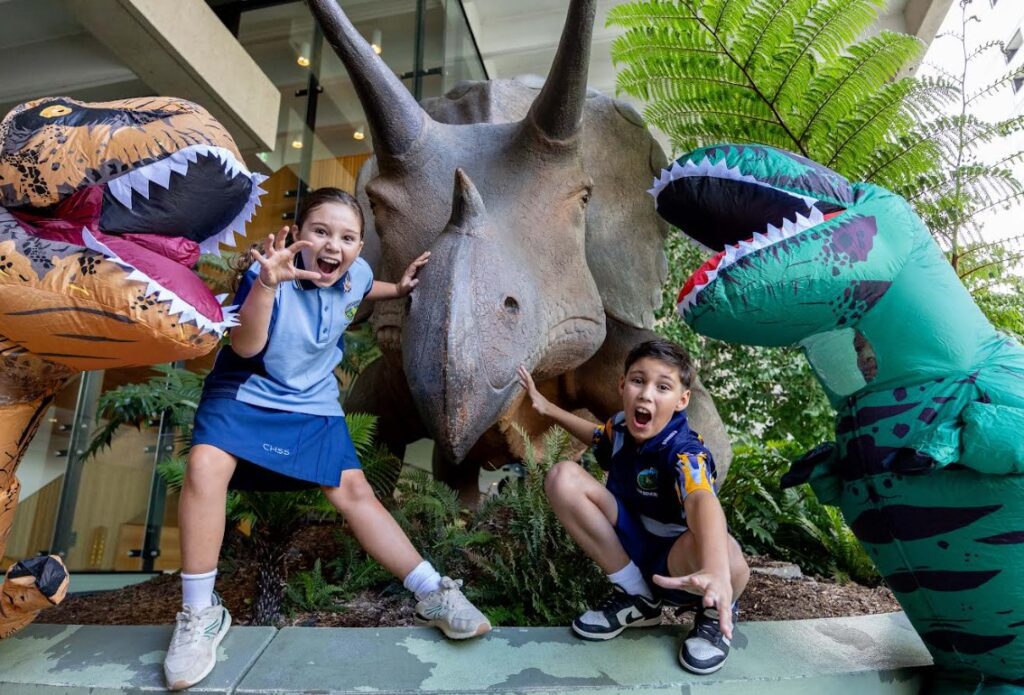
What’s happening?
Queensland Dinosaur Week will run from Monday 4 May to Sunday 10 May 2026, anchored by National Dinosaur Day on Thursday 7 May.
The statewide event will bring together fossil-rich communities, museums, researchers, tourism operators and families in a coordinated program across Queensland.
Led by Dinosaur Experiences Australia, the initiative will showcase the state’s dinosaur, marine fossil and megafauna heritage through hands-on experiences, public talks, workshops and community activations.
Internationally acclaimed palaeontologist Dr Dean Lomax will headline the program during his first Australian tour. He will appear in Winton, attend a National Dinosaur Day breakfast at Queensland Museum in Brisbane, and conclude in Richmond, where the public can dig for marine fossils alongside him.
The 2026 program includes fossil digs and “Digging at Dawn” experiences at Kronosaurus Korner in Richmond, Dinosaurs After Dark at Queensland Museum Kurilpa, and Chinchilla Fossil Finders along the Condamine River.
Public talks, palaeo illustration workshops, astronomy experiences and community activations will also take place across the state.
The week also marks the release of the first GREAT Queensland Dinosaur Trail Pocket Guide and Map, connecting dinosaur, marine fossil and megafauna destinations into one self-drive experience.
The Trail highlights key locations including Winton, Richmond, Eromanga and Mount Isa, linking them into a connected visitor journey across regional Queensland.
Why it matters?
Queensland is recognised as one of the most dinosaur-rich places in the world and holds the majority of Australia’s dinosaur fossil finds.
Minister for the Environment and Tourism Andrew Powell MP said the opportunity for regional communities is significant.
“Queensland’s incredible dinosaur and fossil discoveries turn curiosity into travel, attracting visitors who stay longer, spend more, and supercharge our regional communities,” Minister Powell said.
“Queensland is the Home of the Holiday, and National Dinosaur Day and Queensland Dinosaur Week spotlight our prehistoric wonders, cementing us as a must-visit destination for dinosaur lovers of all ages.”
The initiative strengthens Queensland’s position as Australia’s leading destination for palaeo tourism while connecting regional communities through a shared story of discovery.
Karen Hanna Miller, Executive Officer of Dinosaur Experiences Australia, said the experience goes beyond traditional tourism.
“Queensland’s fossil story is not complete. Every season, new finds reshape our understanding of ancient ecosystems and evolutionary changes. Visitors are not just observing history, they are stepping into a landscape where science is still unfolding, this is why Queensland Dinosaur Week is an extraordinary addition to the state’s tourism and education sectors,” she said.
Local Impact
North and Outback Queensland locations will play a central role in the program, with Richmond and Mount Isa forming key parts of the experience.
Richmond will host hands-on fossil digs and field experiences, allowing visitors to search for marine fossils and take part in guided activities at Kronosaurus Korner.
Mount Isa connects to the Riversleigh World Heritage-listed fossil deposits, which document millions of years of mammal evolution and megafauna history.
These locations are linked through the GREAT Queensland Dinosaur Trail, encouraging travellers to explore regional destinations and experience fossil sites across the Outback.
By the numbers:
-
Queensland Dinosaur Week runs across a seven-day program from 4 to 10 May 2026, with National Dinosaur Day held on 7 May as its centrepiece.
-
Queensland holds the majority of Australia’s dinosaur fossil finds, reinforcing its position as the country’s leading destination for palaeo tourism.
-
The program connects multiple regions, including Winton, Richmond, Eromanga, Mount Isa and Brisbane through one coordinated statewide experience.
Zoom in
Richmond will host key experiences during the week, including fossil digs at Kronosaurus Korner.
Visitors can take part in “Digging at Dawn” sessions and join field activities alongside experts.
The site is home to Kronosaurus queenslandicus, a large marine reptile from the ancient inland sea that once covered Outback Queensland.
In Winton, visitors can walk beside the world’s only known dinosaur stampede trackway.
In Eromanga, visitors can stand beneath the skeleton of Australia’s largest known dinosaur “Cooper”.
These experiences highlight how fossil discoveries are presented as part of regional identity and ongoing research.
Zoom out
The GREAT Queensland Dinosaur Trail connects fossil sites across the state into a unified travel experience for the first time.
The Trail includes curated drive itineraries, key destinations, and links between dinosaur, marine fossil and megafauna stories.
Dr Scott Hocknull, Principal Research Fellow in Applied Palaeontology and Palaeotourism at CQUniversity, said the Trail reflects the scale of Queensland’s fossil record.
“Queensland preserves one of the most extraordinary and diverse fossil records in Australia,” Dr Hocknull said.
“From giant titanosaurs to marine reptiles and Ice Age megafauna, the Trail shows that this isn’t just one discovery, it’s a statewide palaeo narrative written across the landscape.”
He said the fossil record spans ancient marine environments, floodplains and Ice Age ecosystems within one state.
“Queensland’s fossil story is not complete. Every season, new finds reshape our understanding of ancient ecosystems and evolutionary changes,” he said.
The initiative forms part of a broader vision to strengthen Queensland’s leadership in dinosaur and palaeo tourism through to 2045.
It supports regional visitation, promotes STEM engagement and highlights the role of local communities in preserving fossil heritage.
What to look for next?
Event schedules, travel routes and program updates will continue to be released ahead of May 2026.
The GREAT Queensland Dinosaur Trail Pocket Guide and Map will be available at participating destinations and online.
Regional communities across North and Outback Queensland are preparing for visitor interest linked to the week-long program.