What’s Happening?
John Deere is marking Global Reman Day on 23 April 2026 by highlighting its remanufactured parts range.
The company said the parts give customers another repair option at a time of rising input costs and stronger pressure to improve sustainability.
Released from Crestmead on 22 April 2026, the announcement also highlighted the environmental and economic value of remanufacturing.
Global Reman Day is an initiative of the Remanufacturing Industrial Council. It promotes waste reduction, material conservation, lower production costs and job creation.
Why It Matters?
Repair costs and downtime can quickly affect farm and heavy equipment operators. That makes part choice a business decision, not just a workshop decision.
John Deere Australia and New Zealand Director of Aftermarket and Customer Support Steph Gersekowski said that matters in the current climate.
“In the current macro-economic environment, businesses across the board are trying to find efficiencies and optimise their operations, and we understand that having the power of choice when it comes to what parts you use to maintain and repair your equipment is more important than ever,” Ms Gersekowski said.
She said the price difference does not come at the expense of quality.
“Our John Deere Reman portfolio offers a cost-effective alternative to genuine original equipment manufacturer (OEM) parts; Reman parts on average cost 20 to 30% less than brand new OEM parts.
“Despite this lower price point, there are no compromises on quality or performance, with Reman products fully inspected, rigorously tested and built to the latest specifications.”
John Deere said its Reman parts are returned to like-new condition and are backed by warranty support.
Local Impact
The value of those parts is already being felt in North Queensland, especially in the sugarcane-growing region around Ingham.
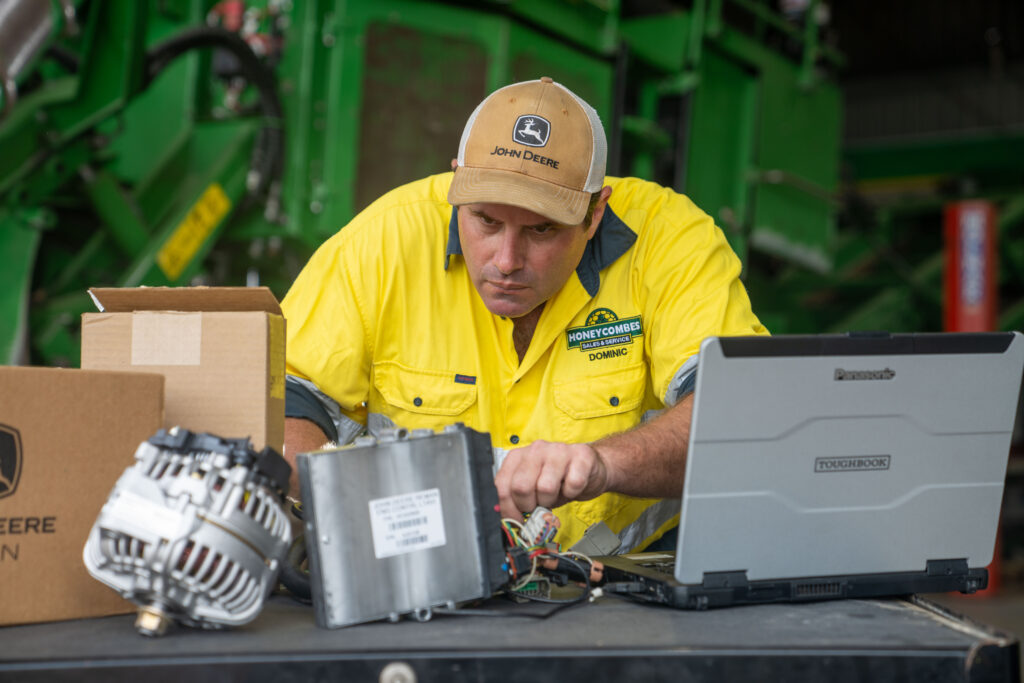
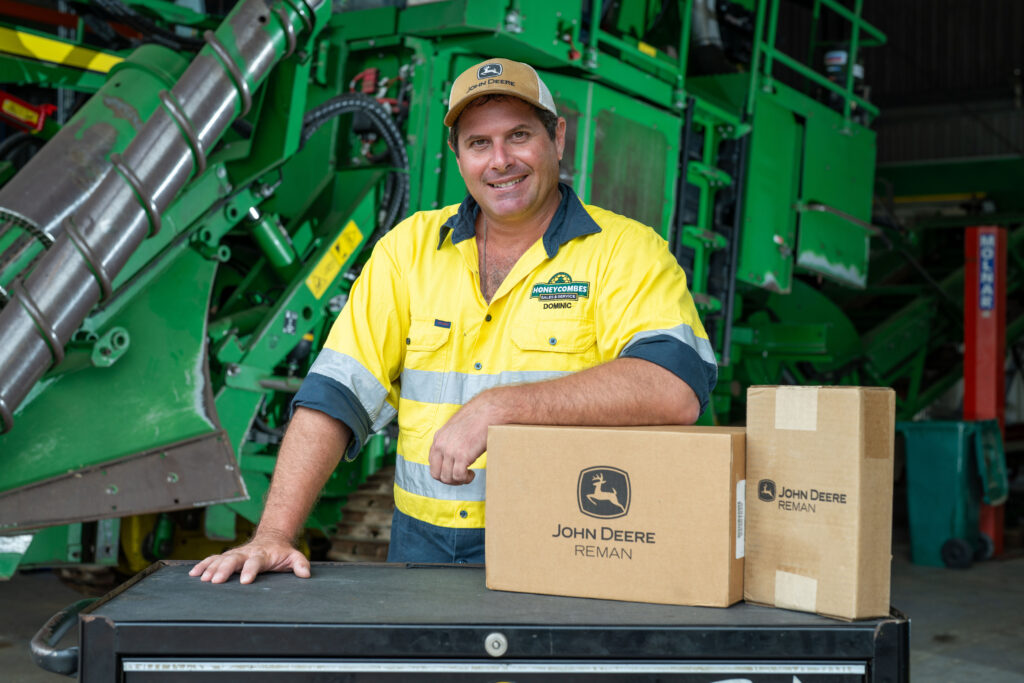
Dom Succio, an auto electrician and diesel fitter with Honeycombes Sales & Services, has worked with John Deere equipment for more than 12 years.
He works on CH570 and CH960 sugarcane harvesters, 9RX 640 Four-Track Tractors, and 6 Series and 7 Series tractors.
Mr Succio said customers and technicians both see the benefit.
“We use Reman parts as much as we can to support the product, and we find customers are fairly open to repairing their equipment with these parts due to the really good warranty and the fact that John Deere stands by the quality of the parts,” Mr Succio said.
“Using a Reman part also reduces equipment downtime – we have most of the parts in stock, and if we don’t have it here, it’s available at one of our other branches or we can easily get it from the Regional Parts Distribution Centre in Melbourne.”
By the Numbers
- John Deere said its Reman range includes more than 2,300 parts across agricultural, professional turf, construction and forestry equipment, showing how widely the program now reaches.
- The company said Reman parts cost 20 to 30 per cent less than new OEM parts on average, which can make repairs more manageable for operators.
- John Deere said Reman warranties can cover parts for up to two years, including labour costs, when installed by an authorised dealer.
- The remanufacturing process also replaces wear-type parts 100 per cent of the time with new John Deere parts, including pistons, liners, bearings, gaskets and O-rings.
Zoom In
For technicians in the field, ease of fit and quick access matter just as much as purchase price.
Mr Succio said Reman parts help on both fronts.
“Reman parts are easy to work with and you know you’ve got a product that’s going to bolt straight in and doesn’t require modifications like third-party parts do,” Mr Succio said.
“It’s genuinely cheaper to go with Reman parts; they’re made for the job and they stand up to the harsh conditions these machines are operating in.”
He said the core return system also helps make the offer more attractive.
“The core return is a selling point of the Reman parts, because we can say to customers: ‘This is how much the Reman part is to repair your equipment, and this is how much we’ll give you for your old part.’
“It’s just another offering to the customer that makes it more cost-effective.”
John Deere said that return step is central to the circular economy behind the program.
Once a used part is returned, the core is sent to a return centre. It is then fully disassembled and cleaned.
The company said each part is checked against the latest specifications. Parts that do not meet standard are either recycled or restored.
The rebuilt product is then assembled by trained technicians and tested before returning to market with full warranty support.
Zoom Out
The story reaches beyond workshops and farm sheds.
John Deere said remanufacturing keeps valuable components in use for longer and reduces the need for new materials.
That gives customers another practical way to lower waste while keeping machines working in demanding conditions.
Ms Gersekowski said the environmental side is a major part of the program.
“We’re proud to offer remanufactured parts as it keeps valuable components in use for longer, helps to reduce environmental impacts and enables our customers to achieve more with less,” she said.
What To Look For Next?
John Deere’s focus on remanufacturing may encourage more customers to return used parts and take part in the circular process behind the program.